

Zero-trust is often sold as a suite of products. For most growing organisations, it is a sequencing problem: identity, device posture, and network segmentation must land before dashboards and buzzwords. Mid-market teams do not need a three-year transformation slide—they need a defensible posture their staff can operate.
This article outlines how Calystron approaches zero-trust networking for ICT estates that already mix on-prem, cloud, and vendor access. The emphasis is architecture and ownership, not a feature checklist.
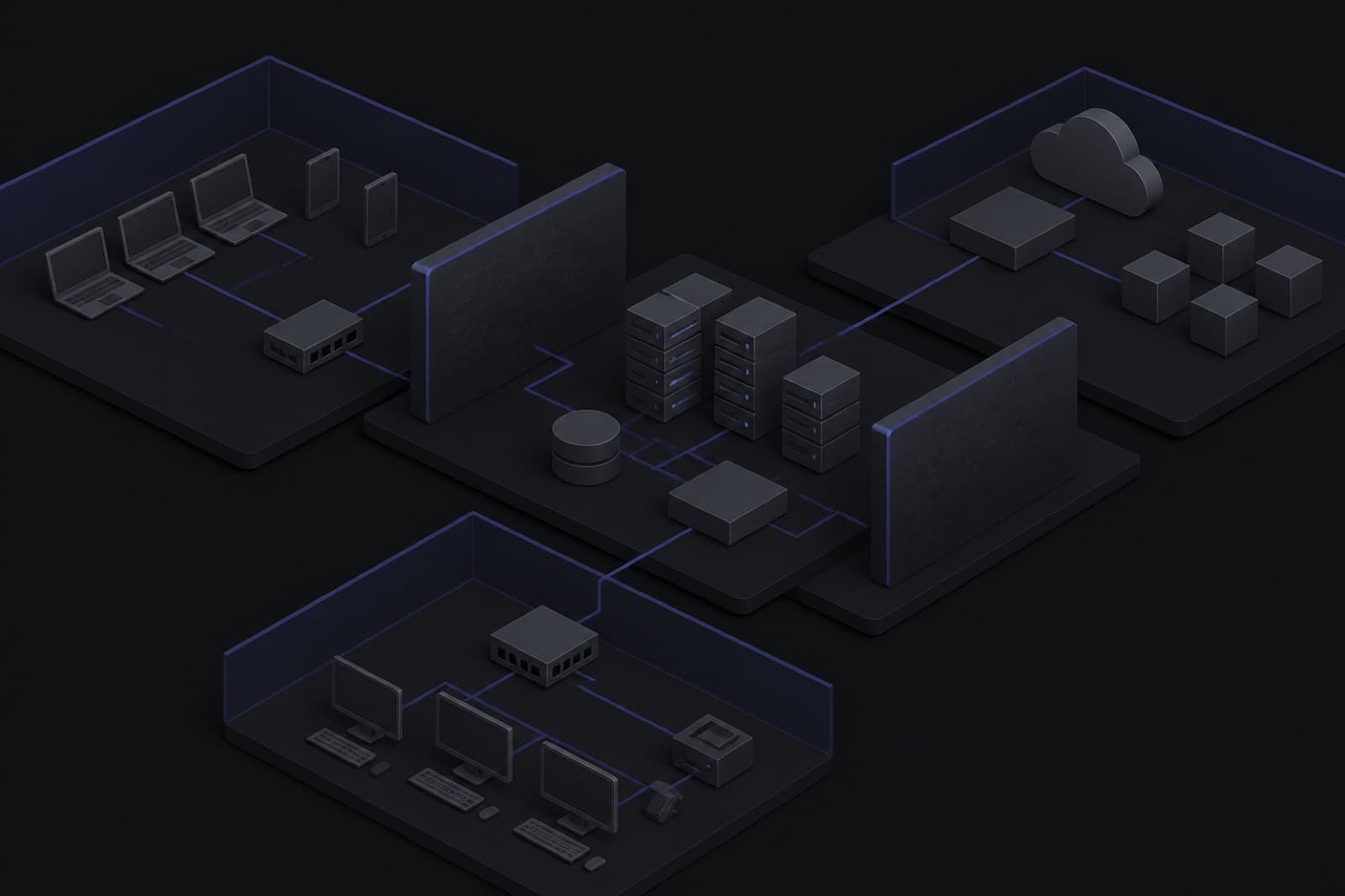
Start with who accesses what
Before east-west visibility projects, build an access map. Privileged paths—admin consoles, jump hosts, production databases, OT/IT bridges—deserve explicit controls first. Broad microsegmentation without that map becomes theatre: policies nobody can explain and exceptions nobody owns.
- List human and service identities that reach production
- Mark privileged paths and shared credentials still in use
- Note legacy systems that cannot move in the first wave
- Assign owners for identity, network, and endpoint controls
A ninety-day sequence that actually sticks
A credible first quarter beats an ambitious year that slips. Sequence for operability and rollback, not for a “zero-trust complete” slide.
- Baseline identity: SSO, MFA, and privileged access reviews for admin paths.
- Classify critical assets and draw trust boundaries around them—not the whole estate at once.
- Enforce device posture on high-risk routes before expanding policy to every laptop.
- Instrument change windows and rollback so security controls do not become outage vectors.
- Publish the access map and exception register where IT and security both work.
Segmentation without boiling the ocean
Segment where blast radius hurts. Protect crown-jewel systems and admin planes before chasing perfect east-west for every VLAN. Temporary broader access can exist if it is time-boxed, logged, and owned.
Practical first boundaries often include: management networks isolated from user VLANs; production data stores reachable only from application tiers; and partner or guest segments that cannot route to admin planes. Document each boundary with the business reason—auditors and new engineers both need the “why,” not only the ACL.
Calystron’s preference is vendor-neutral architecture first, then tooling your team can operate. The goal is a defensible posture—not a feature matrix that only the reseller understands.
What good partners talk about
- Named owners for identity, network, and endpoint controls
- Explicit assumptions about legacy systems that cannot move overnight
- A rollback path for every policy change that touches production traffic
- How the first ninety days will be sequenced—and what is explicitly out of scope
If you are evaluating a partner, ask how they would sequence the first ninety days. Credible answers talk about identity baselines, change windows, and rollback—not product SKUs.
Frequently asked questions
Do we need to buy a zero-trust suite to get started?
No. Start with identity hygiene, MFA on privileged paths, and clear trust boundaries around critical assets. Tooling should follow an architecture your team can operate. Suites help when they implement that sequence—not when they replace it.
What is the biggest mid-market zero-trust mistake?
Buying visibility or policy tooling before an access map and privileged-path controls exist. Without owners and sequencing, dashboards and policies accumulate exceptions and lose trust.
How does zero-trust relate to remote access?
Remote access is often the first place to apply verify-explicitly and least-privilege patterns—MFA, device posture, and application-level access before wide VPN membership. See our companion note on secure remote access without VPN sprawl.
What should be in scope for the first ninety days?
Identity baselines for admins, an access map of privileged paths, trust boundaries around crown-jewel systems, posture on high-risk routes, and operable change/rollback practices. Full estate microsegmentation can wait.
Defensible beats decorative
Zero-trust networking for mid-market teams is sequencing and ownership. Map access, secure privileged paths, segment what matters, and choose tooling last. That is how you avoid enterprise theatre.
Calystron designs vendor-neutral ICT security architectures and stays close to delivery. If you need a ninety-day zero-trust sequence grounded in your estate—not a slide deck—start a conversation with our architects.